
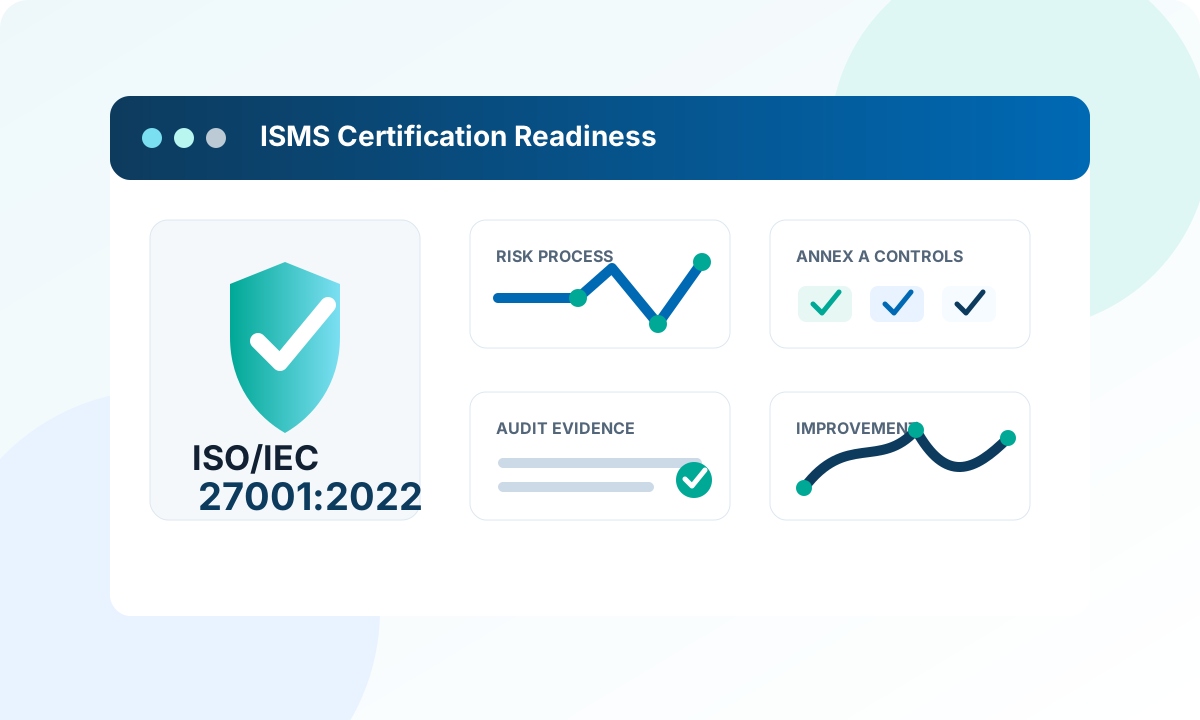
ISO/IEC 27001:2022 is the international standard for an Information Security Management System, commonly called an ISMS. It gives organizations a management-system approach for protecting information, assessing security risks, selecting controls, measuring effectiveness, and improving over time.
Certification is not only a badge for a website footer. Done properly, it becomes an operating model for how an organization protects confidential, sensitive, regulated, and business-critical information.
What ISO 27001:2022 is really about
The standard is built around a management system, not a one-time technical checklist. That matters because information security changes constantly: systems change, threats change, suppliers change, regulations change, and business priorities change.
ISO describes ISO/IEC 27001 as a standard that enables organizations to establish an ISMS and apply a risk management process adapted to their size and needs. It is used by organizations across sectors, not only by technology companies.
What certification means
Certification demonstrates that an organization has implemented an ISMS and that an independent certification body has assessed it against the standard. The certificate should always be understood together with its scope. A certificate for one business unit, product, location, or platform does not automatically mean every part of the organization is covered.
A strong ISO 27001 certification program normally shows evidence of:
- Defined ISMS scope, context, interested parties, and information security objectives.
- Information security risk assessment and risk treatment methodology.
- Statement of Applicability explaining selected and excluded Annex A controls.
- Implemented policies, procedures, technical controls, and operational evidence.
- Internal audit, management review, corrective action, and continual improvement.
What changed in the 2022 version
For many organizations, the most visible change is Annex A alignment with ISO/IEC 27002:2022. The control set moved from 114 controls in 14 groups to 93 controls in 4 themes: organizational, people, physical, and technological controls.
The important lesson is that Annex A is not a shopping list to copy blindly. ISO 27001 starts with risk. Controls are selected because they are necessary for risk treatment, legal or contractual obligations, business objectives, and protection needs.
ISO also lists Amendment 1:2024 for ISO/IEC 27001:2022, covering climate action changes. Organizations preparing for certification should confirm current expectations with their certification body and keep management-system context reviews up to date.
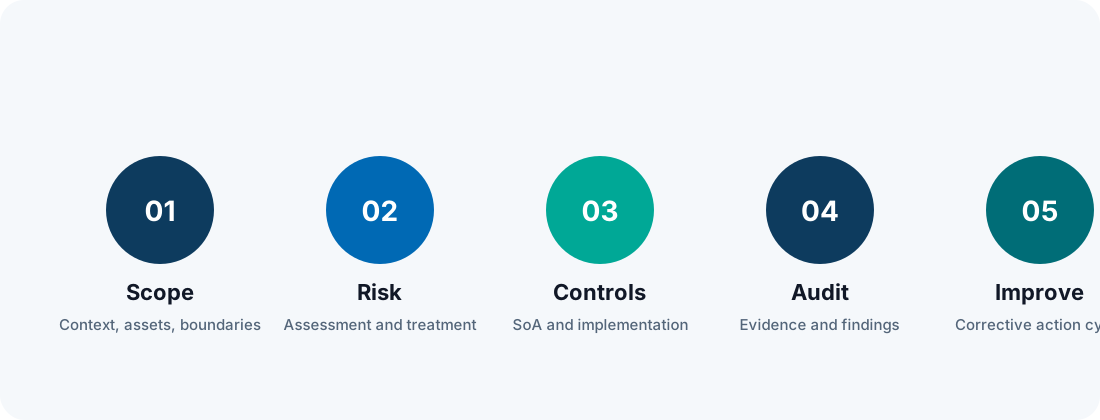
A practical readiness roadmap
Define scope and context
Clarify boundaries, services, locations, systems, interested parties, and what information the ISMS must protect.
Assess and treat risk
Use a repeatable method to identify risks, evaluate them, decide treatment actions, and assign ownership.
Implement controls and evidence
Build the control environment and collect evidence that controls are operating, not merely documented.
Audit and improve
Run internal audits, management reviews, corrective actions, and readiness checks before certification audit.
What auditors usually look for
Auditors are not only looking for documents. They look for a working system. That means interviews, records, configuration evidence, tickets, meeting minutes, internal audit reports, management review outputs, risk treatment status, and proof that nonconformities are handled.
Common weak areas include unclear scope, generic risk assessment, a Statement of Applicability that is not connected to risk treatment, policies with no operational evidence, weak supplier security evidence, and internal audits that do not test effectiveness.
Why this matters for exam preparation
For ISO 27001 Lead Auditor candidates, certification knowledge is more than theory. Scenario questions often test whether you can connect requirements, audit evidence, risk treatment, Annex A control selection, nonconformity writing, and audit conclusions.
When practicing exam questions, ask yourself: what is the audit criterion, what evidence is available, what is missing, and what conclusion is justified?
References
Useful official references for further reading: